

Suspecting moisture beneath your tiles is stressful because the damage hides where you cannot see it. The good news is that you can confirm most cases yourself in under 30 minutes, before spending a rupee or dollar on removal. This guide shows you the exact checks to run and how to read the results.
You can confirm hidden moisture beneath your bathroom tiles with three checks: tap each tile for a hollow sound, scan grout lines with a moisture meter, and press the floor for soft spots.
A hollow tapping sound plus a musty smell is the clearest early warning that water sits below the tile.
Hairline grout cracks alone are usually cosmetic, so do not panic at every crack.
A spongy or flexing floor means the subfloor is wet and needs a professional, not a DIY patch.
Call a restoration pro if a moisture meter reads high more than 48 hours after you dry the surface.
To know if your bathroom floor has hidden moisture beneath the tiles, tap each tile and listen for a hollow sound, scan grout lines and floor edges with a cheap moisture meter, then press the floor for soft or shifting spots. These three checks confirm trapped water before you commit to any repair.
Tile itself rarely fails because it is non-porous. The weak points are the grout and thin-set below it, which absorb water slowly over months. Once moisture reaches the subfloor, the problem turns structural. Most homeowners notice a symptom but cannot tell if it is serious. A stain may be old and dry, or active and spreading. Testing tells you which one you have.
These checks cost under $30 with a basic moisture meter. They take less time than waiting on a contractor callback.
What Are the First Signs of Water Damage Under Bathroom Tile?
You test for water damage under tiles with three quick steps: the tap test, a moisture meter, and a press test.
Tap each tile gently with a knuckle or coin. A solid click means the tile is bonded, while a hollow echo means the adhesive below has failed, often from moisture. Next, run a moisture meter across grout lines and the floor near fixtures, where readings above 15 percent suggest trapped water. Finally, press the floor with your foot and feel for any give or movement.
Guardrail: tiles laid over a concrete slab can sound slightly hollow by nature, so always pair the tap test with a meter reading before concluding.How Do You Test for Water Damage Under Tiles Yourself?
You test for water damage under tiles with three quick steps: the tap test, a moisture meter, and a press test.
Tap each tile gently with a knuckle or coin. A solid click means the tile is bonded, while a hollow echo means the adhesive below has failed, often from moisture. Next, run a moisture meter across grout lines and the floor near fixtures, where readings above 15 percent suggest trapped water. Finally, press the floor with your foot and feel for any give or movement.
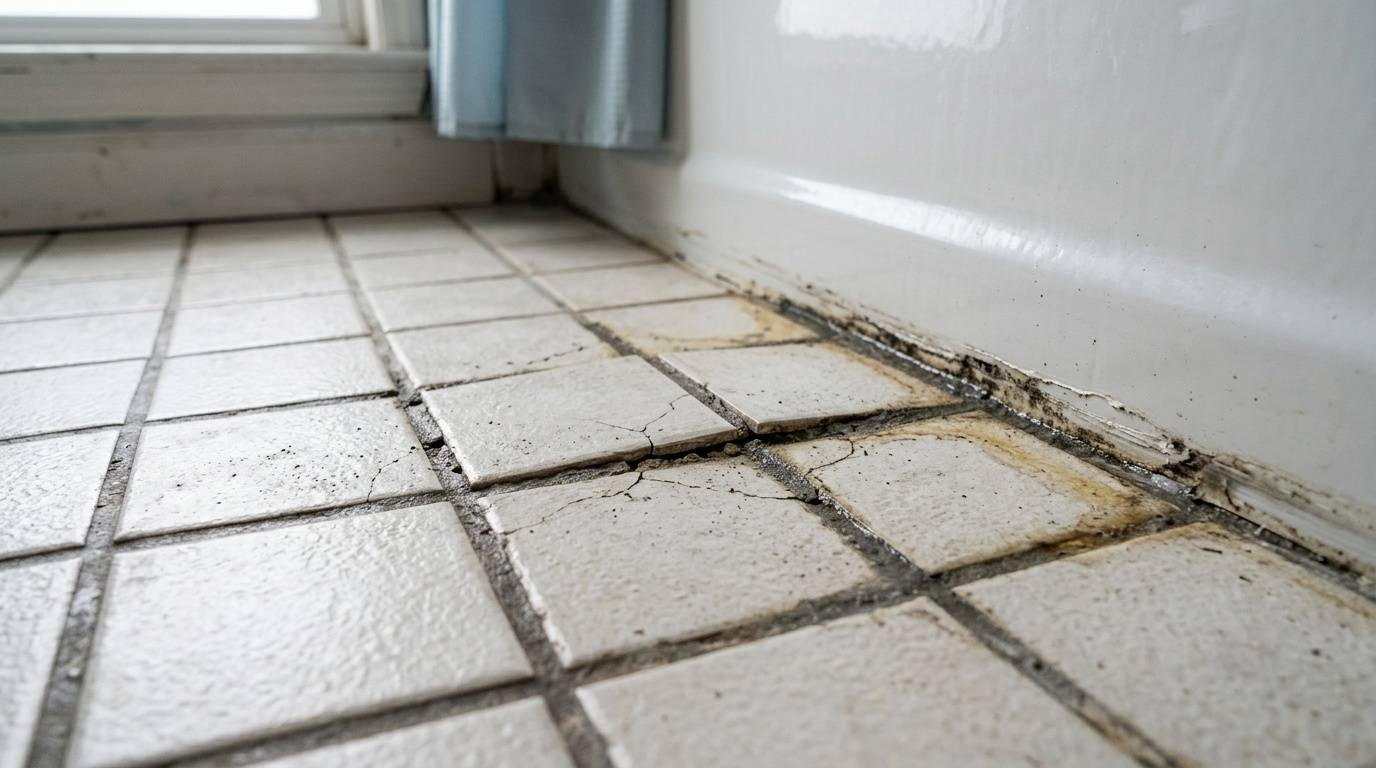
Guardrail: tiles laid over a concrete slab can sound slightly hollow by nature, so always pair the tap test with a meter reading before concluding.
Which Signs Point to Bathroom Floor Water Damage vs. Normal Wear?
Bathroom floor water damage shows movement and moisture, while normal wear shows only surface flaws. The dividing line is whether the problem is wet and spreading.
Loose tiles, a spongy floor, swollen baseboards, and a meter reading that stays high all signal active trouble. Thin grout cracks, faded grout color, and minor scratches are cosmetic and common in any older bathroom.
Guardrail: when unsure, re-test the same spot after 48 hours. A reading that drops means the surface simply got wet, while a reading that holds means water is trapped below.
When Should You Call a Pro for Water Damage in BathroomCall a professional for water damage in bathroom floors when the subfloor feels soft, mold is visible, or moisture readings stay high after drying. These point to structural or health risks that go beyond a simple DIY fix.
A spongy floor means the subfloor has absorbed water and may need replacement as part of a larger Floor Repairing Cost project. Black or green mold along grout lines or baseboards is a health concern and should not be disturbed without proper protection. A leak you cannot locate also requires professional attention, since the source may be a hidden pipe beneath the floor.
FAQs
How do I know if there is hidden water under my bathroom tiles?
Tap each tile for a hollow sound, scan grout lines with a moisture meter, and press the floor for soft spots. A hollow sound plus high moisture readings confirms trapped water. A single dry stain with no movement is usually cosmetic and not urgent.
Can water get under tile that looks perfectly fine?
Yes. Tile is waterproof, but the grout and thin-set beneath it are porous and absorb water slowly. Damage can spread under intact tiles for months before any surface sign appears. Inspect grout and fixture edges regularly, even when the tiles look undamaged.
Does a musty smell always mean trapped moisture?
Not always, but it is a strong warning sign. A musty odor that cleaning cannot remove usually means moisture is trapped in grout, drywall, or subfloor. Pair the smell with a moisture meter check, since poor ventilation alone can also cause odors.
Is a hollow-sounding tile always a problem?
No. A hollow sound can come from an air gap left during installation or from tiles laid over a slab. It becomes a concern when paired with a musty smell, staining, or a high moisture reading. Use a meter to confirm before acting.
How long does the damage take to show under tile?
Trapped water can spread for weeks or months before visible signs appear. Slow leaks behind grout often reach the subfloor before staining or soft spots show. This is why regular grout inspection matters more than waiting for obvious damage.
Will homeowners insurance cover this?
It depends on the cause. Sudden, accidental leaks are often covered, while gradual damage from neglected grout usually is not. Document the damage and confirm coverage details with your insurer, as terms vary by provider and region.